
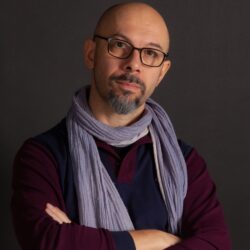
Interview with Stefano Bernardoni
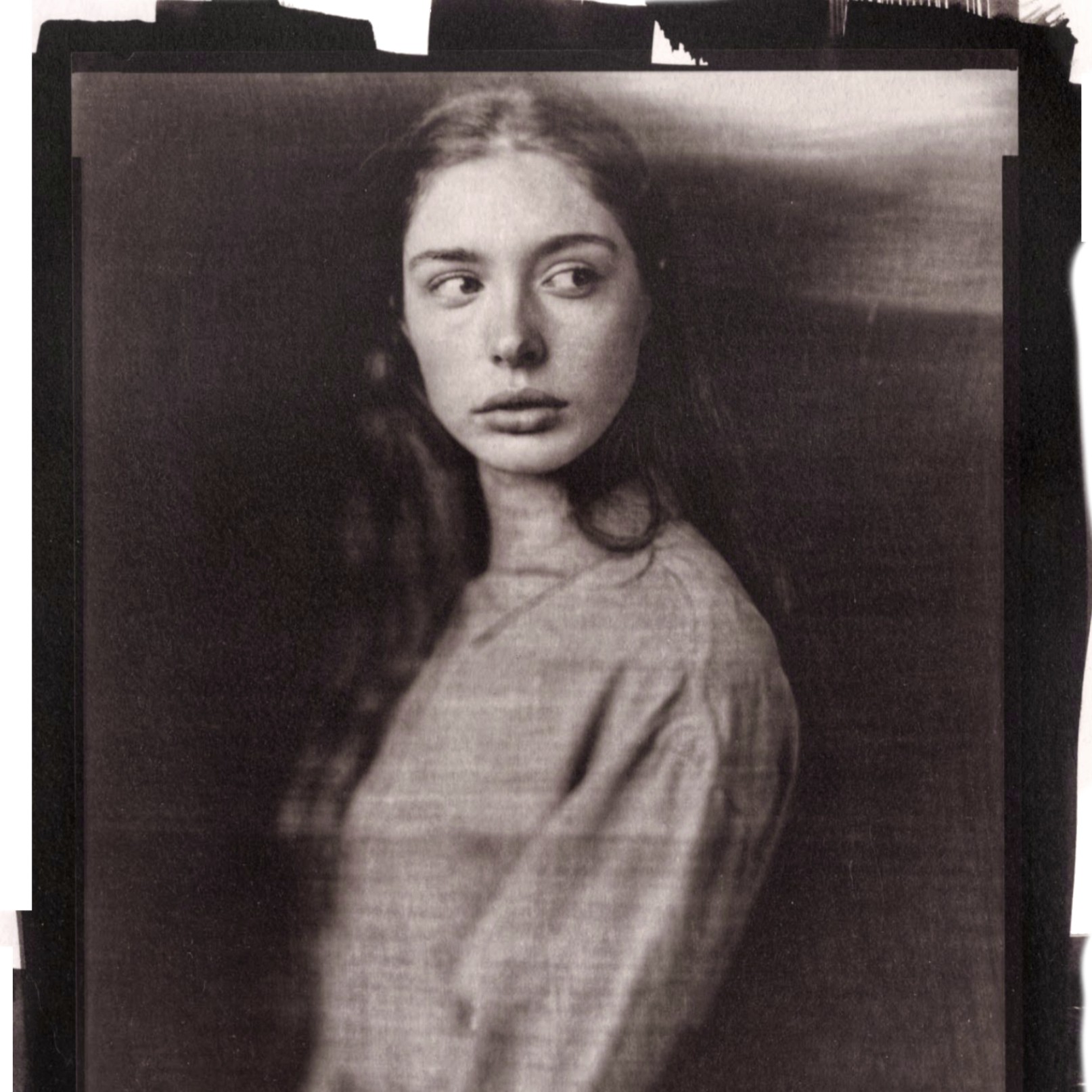
BIFA 2025 Winner, 1st Place, Professional Analog / Film, “Intimate Portrait”
Q: What does “intimacy” mean to you in this context, if it’s not about identity but about the “emotional trace” they leave behind?
For me, photographic portraiture isn’t limited to documenting a body and a face; it’s an inquiry that moves beyond the boundaries of identity. Identity is a vast territory—woven from experiences, beliefs, roles, memories, and inherent contradictions. A single photograph can capture only a fleeting fragment of this complexity.
That fragment, in reality, is the testament to an encounter: the convergence of my vision as a photographer and the authentic reaction of the person in front of my lens. The final result is a visual dialogue, not a monolithic definition.
What I seek is not a “mapping” of the individual but the emotional trace that emerges spontaneously in the moment of connection. Before I even pick up the camera, I dedicate time to listening and conversation. It is within this dialogue that the right harmony is born, the fertile ground from which intimacy blossoms.
Every session is unique. Often, during this shared process, a “small magic” materialises—a window that allows that vulnerability and intimacy to surface and be preserved within the image.
Q: Can you tell us a bit about your background and what inspired you to explore photography, especially such classic, alternative processes like cyanotype?
I have always photographed using black and white film, partly because of when I was born, starting almost as a game as a boy until it became my job. Photography has always been an important part of my life, an expressive form that has allowed me to get to know the world around me and, even more so, myself. After almost forty years, I can’t do without it; it’s a form of continuous self-therapy.
Since 2018, out of curiosity, I started exploring ancient printing techniques and found them very close to my way of photographing. Curiously, cyanotype was the last one I dedicated myself to, because initially I considered it trivial, not only from a technical point of view but also in its expressive potential. I immediately changed my mind: in its apparent banality, I found enormous potential that revealed itself over time. Today I not only use it in my work, but I also teach it in workshops in Italy and abroad.
I am also familiar with other techniques, such as kallitype, salted paper prints, and albumen prints, and I choose the most suitable one depending on the project.
Q: What was the inspiration behind your winning project, Intimate Portrait? How did you develop the idea to portray your subjects as “presences” or “emotional traces” rather than as defined individuals?
From the very beginning, I have always had a prevalent interest in representing the intimate and dreamlike side of existence. My work has constantly focused on these themes, such as spirituality, the unconscious, life, and death, rather than on current affairs stories. These are universal reflections that I have tackled in different ways, parallel to the maturation of my artistic vision. Beyond this, I have always experienced photography as a wonderful tool for personal growth and discovery.
About ten years ago, I chose to use photography to overcome my own form of shyness. I decided to start portraying people within my studio, using a view camera with 8×10 inch plates. This method required the subjects to scrupulously follow my directions, as the slightest imprecision would compromise the final image.
The project “Intimate Portrait” was born from this process.
I deeply love this aspect of photography, when photography itself is placed at the service of our lives. It is an expressive form that forces us to confront reality, and every shot is the exact and tangible result of this relationship. Thanks to this journey, too, I feel I am a better person today.
Q: What motivated you to enter the Budapest International Foto Awards? What does winning 1st place in the People/Portrait category mean to you?
Winning first place was a beautiful, yet unexpected, surprise. Despite having entered several competitions in the past and receiving various honorable mentions, I never imagined I would secure the top spot in such a competitive context.
I have always maintained a certain scepticism regarding photographic competitions, fearing they often focus too much on the superficial aesthetic of the “nice picture”. My work, conversely, aims for greater depth: aesthetics are fundamental, certainly, but they are not the ultimate goal. However, I knew I had a strong project and decided to submit it to the BIFA, which is renowned as one of the most prestigious awards in the industry.
This extraordinary result represents a substantial confirmation for me: the artistic direction I have undertaken is the right one. It offers me strong encouragement to continue my journey. I also hope that this recognition will give my work greater visibility and the opportunity to reach a wider audience.
Q: Could you share some insights into the equipment or techniques you used to achieve this specific look?
As already mentioned, I favour the use of medium and large format cameras, up to 8×10 inches. The main characteristic of these instruments is their slowness, which radically transforms the relationship with the subject: every single frame requires time, attention, and mutual listening. It is an approach that I need in my current path; in the future, who knows?
The process is fascinating: I observe the person through a ground glass, hidden beneath a dark cloth, while the image—upside down—takes shape. Subsequently, I develop the negatives, turn on the light to check that everything went well, prepare the prints, and thus approach my final vision.
It is an extremely slow journey, which I have always compared to a long trip made on foot instead of by car. When walking, don’t you notice so many more details? And how many nuances do we lose by going fast? This is precisely what interests me: the journey, or rather what moves within me, from the human relationship with the subject up to the printed result. The final print is, in a sense, merely the outcome of that journey. In a world that is running far too fast, I sometimes feel the need to slow down, at least when I dedicate myself to something I love and that helps me grow.
On a purely technical level, I work in a small room using continuous lights, never flash. This involves the use of long exposure times, sometimes half a second or more. This slow, almost ritual preparation guides me each time towards that harmony with the subject that I constantly seek.