

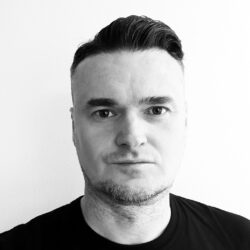
Interview with Ian Flanders
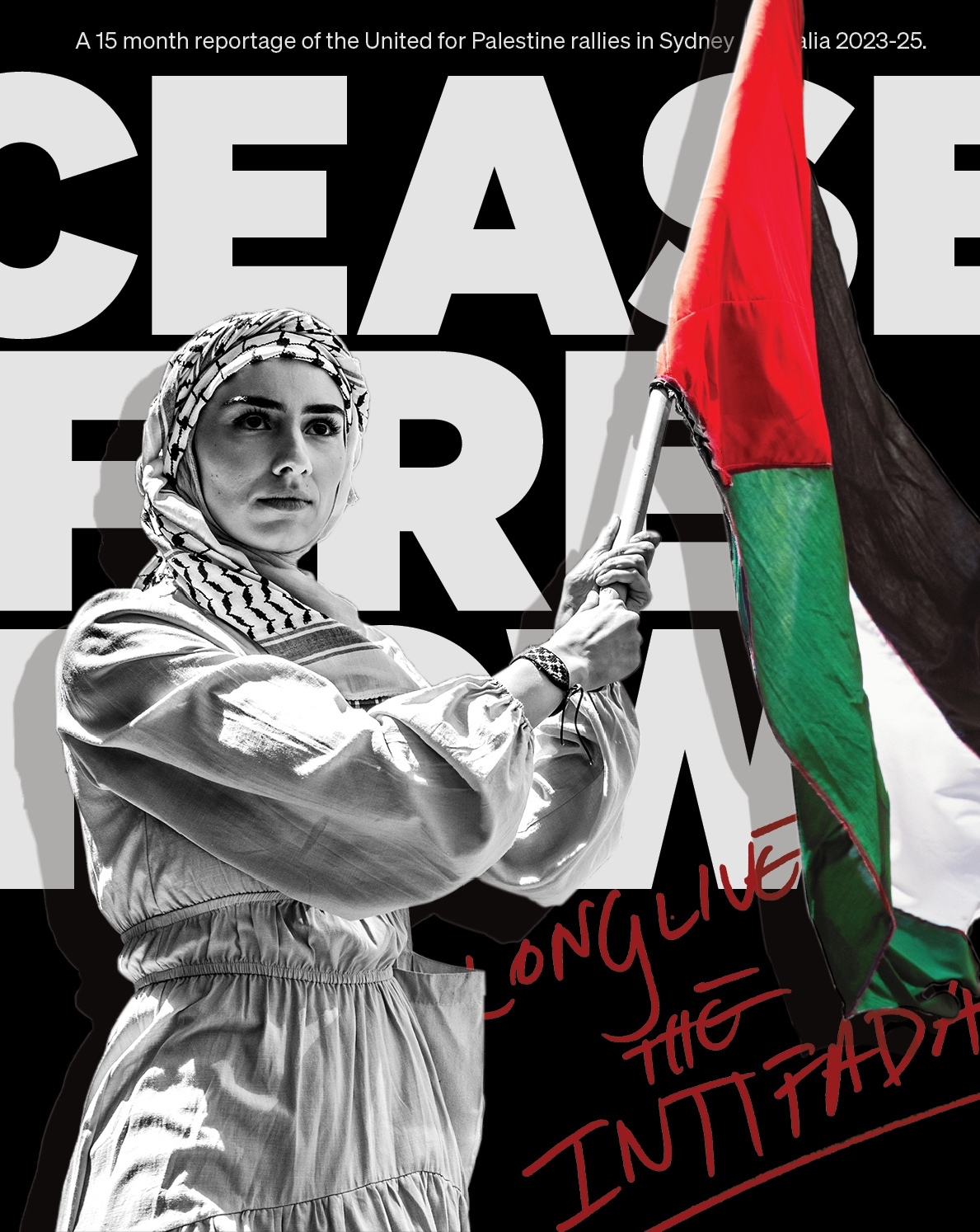
BIFA 2025 Winner, 1st Place, Non-Professional Book, “Cease Fire Now!”
Q: Cease Fire Now! documents fifteen continuous months of rallies in Sydney. What first compelled you to commit to such a long-term reportage on the United for Palestine movement?
This body of work grew organically. No one could’ve ever thought we would be protesting for two years of which the first 52 were consecutive weeks. My commitment to the project was my way of showing the community I was committed to them.
Q: Your book captures voices, faces, and a collective moral stand. How did you approach balancing the immediacy of protest with a visual narrative that works cohesively as a long-form project?
Photographers are story tellers and I always create a book for my long-term projects. The book is the final presentation of that story. I guess you could say for two years. I’ve been taking notes and now it’s time to put them all together and tell that story.
The handwritten messages in my book are just as important as the photos. It was my way of giving the Palestinian and Muslim community a greater sense of being allowed to be heard without an external narrative. Basically, what the mainstream media do.
Q: What were the biggest challenges you encountered while photographing these rallies, both technically and personally?
Being the odd one out first and foremost – i.e white guy with a camera putting his camera in peoples faces – and it’s important to note, this is a community who have reason to be cautious. And I felt that. If it wasn’t the pro-longed looks coming my way it was multiple people asking “who do you work for, who are you” etc…
From a technical point of view I guess debating if I should be using a flash which is something I have avoided since using a camera and a dreaded zoom lens – I just want to stick to my primes!
Q: What motivated you to enter the Budapest International Foto Awards, and what does winning an award for this particular series mean to you personally and professionally?
Submitting my work to respectable photo awards such as the Budapest International Foto awards comes with a sense of responsibility, appreciation and humility. Exposure for oneself is one thing but it is the exposure of the story that is my driving force when submitting into photo awards and festivals around the world.
Q: Your work gives visibility to individuals who refuse to stay silent. Why do you feel photography is an important tool in documenting social justice movements today?
In short we don’t take photos. Photos are given to us. And to elaborate, the people I have photographed in this body of work are screaming to be heard. We are talking about people who have been dehumanised since 1948 and only now is the world paying attention to them. It’s an honour and a privilege beyond words what this community has given me through the gift that is photography.